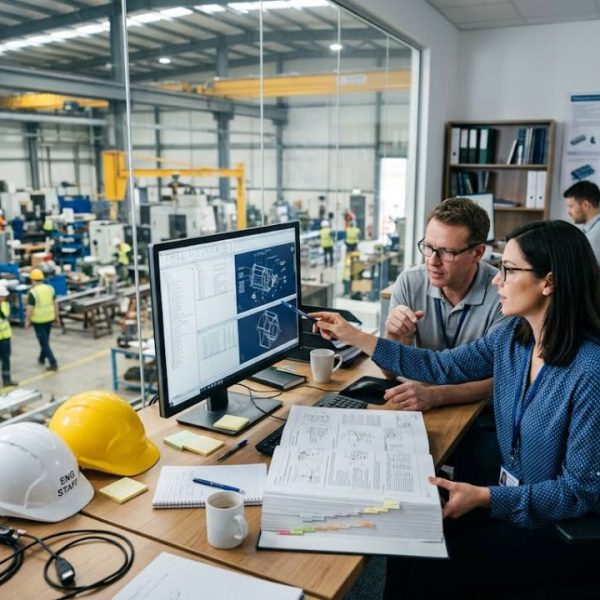
Technical documentation is one of the largest and least visible translation jobs in any manufacturing or engineering company. Every machine ships with manuals, safety data, installation guides, maintenance schedules and spare part lists. Every software release adds interface strings, help pages and release notes. Multiply that by fifteen or twenty languages, and the volume becomes enormous.
Most technical teams do not struggle with translation quality first. They struggle with control. Which version of the Polish manual is current? Who approved the German safety warning? Why does the Spanish interface use two different words for the same button?
Beyond manuals and safety sheets, physical products carry regulated text on every pack. Professional packaging translation services ensure ingredient lists, warnings and usage instructions stay accurate and compliant across markets, all managed inside the same enterprise system. When label content lives alongside documentation in one TMS, terminology stays consistent and audits become straightforward. Treat packaging as part of your content supply chain, not an afterthought.
The hidden cost of scattered files
Many companies still manage technical translation through email and shared drives. A documentation manager exports a Word file, sends it to an agency, receives it back weeks later and pastes it into the publishing system. Meanwhile, engineering has updated the source text twice.
The result is familiar: outdated translations, inconsistent terminology, repeated costs for text that was already translated and last-minute panic before product launches. In regulated industries, it can also mean compliance risks when safety information differs between language versions.
What an enterprise TMS brings
An enterprise translation management system acts as the central hub for all multilingual content. It connects directly to documentation tools, content management systems and code repositories. When source text changes, only the new or modified segments are sent for translation.
- Translation memories reuse approved sentences across manuals and releases.
- Term bases enforce consistent technical vocabulary in every language.
- Automated workflows route content to translators, reviewers and subject experts.
- Quality checks catch missing numbers, units and tags before publication.
- Dashboards show progress, deadlines and costs for each language.
For technical content, where the same warnings and procedures appear again and again, reuse rates are often very high. That translates directly into lower costs and faster delivery.
Standards and quality
Technical communication has its own professional community and standards. Associations such as tekom in Europe promote best practices for writing and managing technical documentation, including multilingual publishing. For translation services, the international standard ISO 17100 sets requirements for qualified translators and a separate revision step.
A TMS supports these standards by making every step traceable. You can see who translated a segment, who reviewed it and when it was approved. That traceability matters in audits and product liability questions.
German, the language of engineering
Much of Europe's industrial documentation starts in German. Machine builders, automotive suppliers and medical device makers in Germany, Austria and Switzerland often write their source manuals in German and then need English as the first target language, before translating into other markets.
Getting that first step right is crucial, because every other language often follows the English version. Specialised german to english translation services with engineering expertise ensure that compound technical terms, standards references and safety wording are rendered precisely.
New markets, new language pairs
Supply chains and customer bases change. Companies involved in energy, infrastructure and reconstruction projects in Eastern Europe increasingly handle Ukrainian documentation: site reports, specifications, certificates and correspondence with local partners.
A qualified ukrainian to english translator with technical knowledge helps project teams understand local documents accurately. Once these translations sit in the TMS, their terminology can be reused for future reports, keeping the whole project consistent.
Machine translation inside controlled workflows
Machine translation works surprisingly well for structured technical content, especially when trained or adapted with company terminology. Many enterprises now use it as a first draft inside their TMS, followed by professional post-editing. The system makes it clear which content went through which process, and sensitive material such as safety warnings can be routed to full human translation.
Integrating with documentation tools
Technical writers often work in structured authoring tools and XML-based formats. A good enterprise TMS understands these formats, protects tags and variables and returns files that publish without manual fixes. For software teams, integration with repositories means new strings are translated continuously rather than in stressful batches before each release.
Choosing a system
When evaluating options, technical teams should look at file format support, integration options, security and user management, scalability and reporting. A pilot project with a real manual or software release is the best way to see how a system behaves under real conditions. Involving translators and reviewers in the pilot reveals usability issues early.
A checklist for documentation managers
- Centralise all technical translation in one system.
- Build and maintain terminology from the start.
- Translate only what changes, and reuse everything else.
- Keep full traceability for compliance and audits.
- Combine machine translation and expert review where appropriate.
The bottom line
Technical documentation will only grow as products become more complex and markets more global. Companies that manage translation as a controlled, connected process gain speed, reduce risk and save money. An enterprise translation management system is not a luxury for large corporations. For any team publishing technical content in several languages, it is quickly becoming a necessity.
Systems alone do not solve that control problem. Skilled localization services help manufacturers adapt manuals, interface strings and safety warnings for each market while keeping approved terminology intact. Pairing that expertise with a strong TMS gives teams traceability without slowing releases. The result is documentation customers can trust in every language they actually read.